Baby Duck: A Seasonal Embroidery Gem
First Impressions: Playful, Cozy & Instantly Gift-Ready
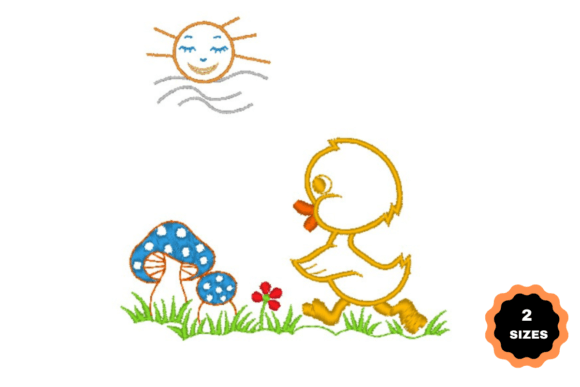
As an embroidery designer who’s built seasonal collections for over a decade, my first glance at Baby Duck told me everything I needed to know: this is a high-intent holiday embroidery. It radiates soft playfulness—not cartoonish, not overly saccharine—but warm, gentle, and emotionally resonant. The line work feels hand-drawn yet precise; the proportions are balanced for small-scale impact without sacrificing charm. There’s no clutter, no unnecessary flourishes—just clean, confident stitching that reads beautifully even at 3 inches tall. It leans into cozy nostalgia, not modern minimalism or rustic edge. That makes Baby Duck uniquely versatile: it fits spring baby showers, Easter brunch linens, Mother’s Day aprons, summer cottage towels, back-to-school totes, and even quiet winter nursery decor. It doesn’t scream “holiday,” but it *welcomes* celebration—making it ideal for year-round seasonal embroidery with emotional staying power.
Where Baby Duck Shines in Real Holiday Selling
This isn’t just another digital embroidery file—it’s a small shop product multiplier. On sweatshirt embroidery, Baby Duck anchors family matching sets with instant sweetness and zero visual noise. Paired with simple script names or monograms, it transforms blank crewnecks into personalized gifts parents actually want to photograph and share. As a tote bag design, it adds quiet sophistication to farmers’ market or library runs—especially when stitched in muted sage, oatmeal, or dusty blue thread colors. For kitchen towel embroidery, it lands perfectly between functional and heartfelt: think linen towels gifted at housewarmings or bridal showers. As a pillow cover motif, it softens modern interiors without clashing. And as an embroidered patch, it scales beautifully onto denim jackets, backpacks, or baby blankets—ideal for craft fair displays where tactile appeal drives impulse buys.
Etsy sellers will love how Baby Duck performs in listings: it photographs cleanly against neutral backdrops, integrates seamlessly into printable mockups, and supports cohesive bundles (e.g., “Nursery Nesting Set” with matching towel, bib, and onesie). Social media previews pop—no heavy editing needed—because its shape and rhythm read clearly even in thumbnail size. And because it avoids trendy tropes, it stays relevant across multiple seasons, reducing your need to refresh inventory constantly.
Use With Care: Practical Limits for Real-World Stitching
That said, Baby Duck isn’t universally foolproof—and knowing its boundaries saves time, thread, and customer trust. Avoid using it on curved caps or tightly stretched garments unless you’ve tested hooping stability first. Its gentle curves don’t translate well to rigid hoops on uneven surfaces. On thick towels or dense terry cloth, stitch density matters: if the file packs too many fills too tightly, it’ll pucker or distort. Always test on fabric texture similar to your final product—not just cotton swatches. For dark fabric, skip white thread alone; layer a subtle underlay or choose ecru, heather gray, or antique gold for warmth and depth. And while Baby Duck looks delicate, avoid metallic thread unless you’ve confirmed the file accommodates slower speeds and higher tension—metallics can snag on fine details like beak contours or feather edges.
Also note: if your version includes optional elements (like tiny flowers or border accents mentioned in “comes with multiple embr”), verify which variants scale reliably below 4 inches. Tiny lettering or layered details may vanish on small hoop sizes or get lost on stretchy knits. When in doubt, simplify—Baby Duck’s strength lies in its clarity, not complexity.
Why Baby Duck Builds Trust & Value During Peak Season
Holiday shoppers don’t just buy products—they buy confidence, care, and connection. Baby Duck delivers that quietly. Its gentle aesthetic signals thoughtfulness, not mass production. That builds customer trust, especially for handmade gift buyers comparing dozens of Etsy listings. Visually, it’s instantly recognizable at a glance—no decoding required—which boosts visual recognition across your brand’s social feed, email banners, and packaging. And because it works across categories (apparel, home, baby), it reinforces brand consistency without repetition fatigue.
It also elevates perceived product value. A plain kitchen towel becomes a keepsake when adorned with Baby Duck; a basic sweatshirt becomes a cherished heirloom piece. That emotional lift directly supports premium pricing—critical when margins tighten during holiday production. Plus, its broad age and occasion appeal (Baby Animals category aside) means it avoids pigeonholing: grandparents buy it for grandkids, friends gift it for new parents, teachers use it for classroom rewards. That versatility = wider reach, faster turnover, and stronger engagement during high-intent shopping windows.
Designer Notes You Can’t Skip
- Always test thread colors on both light and dark fabric—what reads sweet on ivory may look washed out on navy.
- Check stitch density before scaling down; high-density files lose definition fast under 3 inches.
- Confirm hoop size compatibility—don’t assume a 5x7 file will center cleanly on a 4x4 hoop without adjustment.
- Match stabilizer to fabric: cutaway for knits, tear-away for stable wovens, heavy-duty for towels.
- Create realistic mockups—not just flat PNGs, but draped tote bags or folded pillow covers—to preview how Baby Duck lives in real life.
- Review small details post-stitch: check beak sharpness, eye clarity, and feather separation—especially after washing tests.
- Plan matching color palettes across your collection (e.g., duck yellow + moss green + cream) to unify seasonal drops.
- Verify commercial licensing before selling finished products—this is non-negotiable for Etsy sellers and small shop owners.
Baby Duck isn’t just charming—it’s commercially intelligent. It balances emotional resonance with technical flexibility, making it one of those rare machine embroidery designs that earns its place in every seasonal launch. Whether you’re building a limited-edition holiday line or stocking evergreen handmade gifts, this embroidery file earns its spot—not because it’s trendy, but because it’s trustworthy, adaptable, and quietly unforgettable.