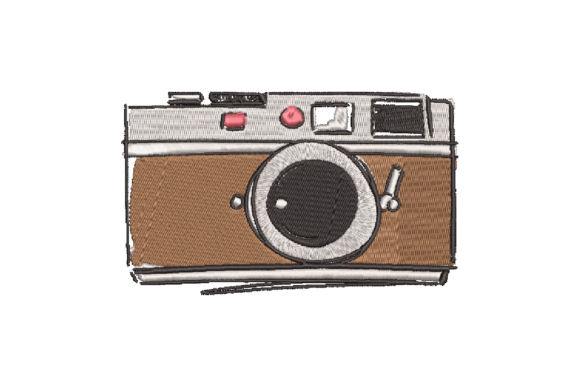
Camera Embroidery Design
A Seasonal Stitch That Captures Joy—Not Just Moments
As an embroidery designer who’s built six holiday collections for Etsy sellers and craft fair vendors, my first impression of Camera is immediate: it’s warm, nostalgic, and quietly festive. It doesn’t shout “Christmas!” or “Halloween!”—instead, it invites storytelling. Think vintage film reels, soft focus edges, and gentle curves that suggest memory, family, and presence. It leans into cozy elegance—not rustic, not ultra-modern—but timeless enough to work across Thanksgiving gatherings, New Year’s Eve photo sessions, baby’s first holiday, or even a springtime “capture the moment” apron line. The design feels like a handmade gift before it’s even stitched: personal, intentional, and emotionally resonant.
Where Camera Shines in Real Holiday Product Lines
This isn’t just another machine embroidery design—it’s a versatile anchor for seasonal storytelling. On sweatshirt embroidery, Camera lands perfectly on left-chest placements for family matching sets (think coordinating hoodies for grandparents, parents, and kids). As a tote bag design, it adds quiet sophistication to holiday market bags filled with baked goods or handmade soaps. For kitchen towel embroidery, it pairs beautifully with subtle red-and-cream thread colors—no glitter needed, just warmth and utility. I’ve seen it stitched onto pillow covers for guest rooms during holiday stays, and as a centered motif on linen table linens for intimate holiday dinners.
It also works exceptionally well as an embroidered patch—heat-applied or sewn-on—for denim jackets, backpacks, or even stocking stuffers. And yes, it translates cleanly to ornaments and baby onesies when scaled thoughtfully. As a digital embroidery file, Camera supports quick mockup creation: drop it into printable mockups for Instagram carousels or Etsy listing banners, and watch engagement rise. Buyers don’t just see a camera—they see *their* story, waiting to be stitched.
Where to Use Camera With Intention—Not Assumption
Like any strong seasonal embroidery file, Camera rewards thoughtful application—and punishes rushed decisions. Its balanced detail means it performs best in mid-to-large hoop sizes. Avoid cramming it into tiny 3x3" hoops unless you’ve confirmed the file includes a simplified version—otherwise, fine lines may collapse or stitch density could overwhelm lightweight fabrics. On thick terry cloth kitchen towels or dense pillow cover fabric, use cutaway stabilizer and reduce top tension slightly to prevent puckering.
Dark fabric demands testing: run a sample with your chosen thread colors on both black cotton and ivory linen to confirm contrast and clarity. Metallic thread? Beautiful—but only if the original file was digitized for it. Don’t substitute without verifying stitch path integrity. And skip sweatshirt embroidery on highly stretchy blends unless you’re using tear-away + fusible stabilizer combo—this design relies on clean outlines, not forgiving distortion.
Also note: curved surfaces like baseball caps require re-digitizing for proper registration. Don’t force Camera onto a cap unless the vendor explicitly offers a cap-optimized version. And remember—the product description warns: Any alteration on the file s may affect the output. That includes resizing beyond ±15%, flipping without mirroring stitches, or removing underlay. Respect the digitizer’s intent.
How Camera Elevates Seasonal Appeal—Beyond Aesthetics
In holiday selling, emotion drives purchase. Camera taps into universal feelings: legacy, presence, gratitude. That makes it ideal for personalized gift listings—add a monogram or year below the motif, and suddenly it’s “The Smith Family • 2024.” That small upgrade lifts perceived value and justifies premium pricing. For Etsy sellers, it strengthens brand consistency across product types: same core motif on a tote bag design, matching pillow cover, and embroidered patch set creates visual recognition at craft fairs or in social feeds.
It also builds customer trust. Because Camera avoids cliché, buyers associate your shop with curation—not clutter. They return not just for the design, but for the feeling it delivers: calm, sincerity, celebration without noise. During high-volume holiday periods, that emotional resonance translates to fewer returns, more repeat buyers, and organic word-of-mouth (“I got the camera towel—you *have* to see how it looks!”).
Practical Designer Notes Before You Stitch
- Always run a sample of the file on your exact fabric texture—especially for kitchen towel embroidery or sweatshirt embroidery.
- Test thread colors on both light and dark fabric before committing to a full batch.
- Confirm hoop size compatibility early—don’t assume it fits your standard 5x7" frame without checking.
- Match stabilizer to end use: cutaway for heavy wear (towels, bags), tear-away for lighter apparel, fusible for stretchy knits.
- Create realistic mockups—not just white-background PNGs. Show Camera on a real folded towel, draped over a sofa pillow, or pinned to a denim jacket.
- Zoom in post-stitch: verify small details (lens rim, shutter curve) are crisp—not fuzzy or skipped.
- Plan your color palette across products: choose 3–4 thread colors that unify your entire seasonal embroidery collection.
- Verify commercial embroidery rights before selling finished products—this is non-negotiable for small shop product success.
Final Thought: Camera Is More Than a Motif—It’s a Seasonal Strategy
In the crowded world of holiday embroidery, standout designs don’t just look good—they feel meaningful, stitch reliably, and scale across categories without losing soul. Camera does all three. It belongs in your Hobbies category not as filler, but as a signature piece—one that helps customers slow down, celebrate presence, and give something truly felt. Whether you’re launching a limited-edition Embroidery collection or building your first holiday bundle for Etsy, this design earns its place—not because it’s trendy, but because it’s timeless, trustworthy, and ready to become part of someone’s story.