Squirrel Border: A Charming, Versatile Embroidery for Small Business Branding
First Impression: Friendly, Handmade, and Professionally Approachable
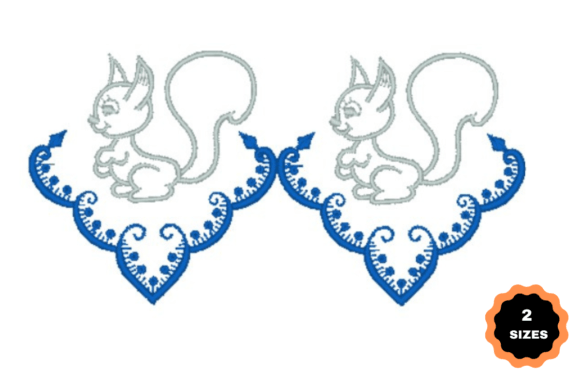
As an embroidery designer who’s developed hundreds of commercial designs for cafés, florists, pet brands, and handmade studios, my first reaction to Squirrel Border is immediate warmth. The name alone evokes whimsy and nature—ideal for small businesses that want to feel grounded, authentic, and inviting. Based on the description—“This adorable embroidery will give your fabrics an extraordinary look”—Squirrel Border positions itself as more than decoration: it’s a tactile brand signature. It reads as friendly and handmade, yet polished enough for professional merch. It’s not overly rustic or cartoonish; instead, it strikes a balance between playful charm and refined execution—perfect for boutiques, creative studios, and local makers who value craftsmanship without sacrificing clarity.
Real-World Performance Across Business Applications
Squirrel Border shines where many decorative borders fall short: in functional, high-visibility branding. As an embroidered patch, it adds instant character to tote bags, denim jackets, and staff aprons—especially for bakeries or florists wanting subtle woodland charm. On caps, its border structure allows clean framing around a small business logo or shop name, avoiding visual clutter while reinforcing identity. For custom apparel like work shirts or uniforms, placing Squirrel Border along a sleeve cuff or chest pocket edge delivers consistency without overwhelming the garment.
It also works beautifully as a branded product accent. Imagine it stitched onto the corner of a linen tea towel, the hem of a reusable produce bag, or the tag of a handmade soap bundle—small touches that elevate perceived value and reinforce brand cohesion. Etsy sellers and crafters benefit most when using Squirrel Border as part of a unified design system: paired with a simple wordmark or monogram, it becomes instantly recognizable across packaging, hang tags, and digital mockups.
Where to Use Squirrel Border Thoughtfully
Like any machine embroidery design, Squirrel Border performs best when matched to the right context. Its border format makes it less ideal for tiny cap fronts under 2.5 inches unless simplified—fine details may blur or lose definition at ultra-small scale. On curved surfaces like baseball caps or rounded tote handles, test stitch placement carefully: dense sections can pucker if stabilizer isn’t matched to fabric texture and stitch density. Dark uniforms (navy, charcoal, black) demand high-contrast thread colors—avoid light pastels unless you’re intentionally going for softness.
Also consider fabric behavior: textured weaves like burlap or slubbed linen require extra stabilizer support to prevent distortion, especially along continuous border lines. And for items subjected to frequent washing—think café aprons or kids’ boutique merchandise—verify that the design’s stitch density doesn’t compromise durability. Overly tight fills or thin connecting stems may wear faster than balanced, open motifs.
How Squirrel Border Strengthens Brand Identity
For small businesses, consistency is trust—and Squirrel Border delivers visual continuity across touchpoints. When used across embroidered patches, tote bag designs, and apron embroidery, it becomes a quiet anchor: customers begin associating that gentle, organic shape with your shop’s personality. Unlike generic fonts or stock icons, a well-executed border like this signals intentionality. It tells clients your brand values detail, care, and handmade authenticity—even when produced at scale.
That perception lifts product value. A $28 tote bag with Squirrel Border stitched cleanly near the handle feels more considered than one with a printed logo alone. It also boosts buyer engagement: shoppers linger longer on items with thoughtful textile details, and they’re more likely to photograph and share them—organic marketing gold for Etsy sellers and local creatives.
Practical Designer Notes Before You Stitch
Before committing Squirrel Border to production, follow these field-tested steps:
- Test in black and white first. This reveals spacing issues, unintended gaps, or areas where thread overlap might cause bulk.
- Check small-patch viability. Resize the embroidery file to your target patch dimensions (e.g., 2” x 2”) and inspect outlines and negative space—does the squirrel motif remain legible?
- Review thread color contrast. Especially on dark or busy fabrics, choose thread hues that pop—not just aesthetically, but functionally.
- Inspect spacing and alignment. Borders must flow seamlessly when repeated or mirrored. Confirm no awkward breaks occur at corners or joins.
- Confirm hoop size compatibility. Not all borders fit standard 4x4 hoops—if yours requires larger framing, adjust digitizing or layout accordingly.
- Test on real fabric with proper stabilizer. A cotton twill apron behaves differently than canvas tote material—don’t skip physical samples.
- Create a printable mockup for client approval. Visual buy-in early prevents costly rework later.
- Compare alongside other design assets. Does Squirrel Border harmonize with your logo, typography, and packaging palette—or does it compete?
- Verify commercial licensing. Since this is a digital embroidery file intended for small business merch and embroidered patch production, confirm it permits commercial embroidery use before mass application.
Finally, remember: Squirrel Border isn’t just a decorative flourish—it’s a strategic brand tool. Used intentionally, it transforms everyday items into memorable, tactile expressions of your business’s voice. Whether you're stitching for a neighborhood florist, launching a pet-themed line, or building cohesive merch for your creative studio, this border brings cohesion, charm, and quiet professionalism to every finished product.