Cat and Mouse: A Craft Fair-Ready Embroidery Design
First Impression: Playful, Timeless, and Booth-Ready
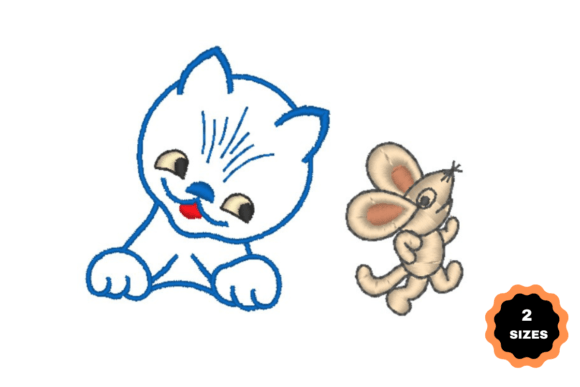
As an embroidery designer who’s prepped over 200 craft fair booths—from Portland makers’ markets to Nashville holiday bazaars—I opened Cat and Mouse expecting charm. What I got was more: instant visual clarity, gentle humor, and quiet sophistication. It reads as playful but not cutesy, whimsical but not chaotic, and handmade but not amateur. That balance is gold for handmade market buyers who scroll fast, touch fabrics longer, and choose pieces that feel intentional—not just decorative. It leans into the enduring appeal of the Cats category without leaning on cliché (no glitter paws or cartoon speech bubbles). Instead, it suggests narrative—curiosity, contrast, quiet tension—all in a single, balanced composition.
Where Cat and Mouse Shines On Real Craft Fair Products
This machine embroidery design isn’t one-note. Its strength lies in adaptability across your best-selling handmade product lines:
- Tote bag design: Centered on a natural canvas tote, Cat and Mouse becomes a conversation starter—soft enough for moms, clever enough for teens, nostalgic enough for grandparents. Works beautifully at 3.5"–4.5" wide.
- Apron embroidery: Positioned just above the pocket or centered on the bib, it adds personality without overwhelming function. The scale reads cleanly from 6 feet away—the sweet spot for booth browsing.
- Tea towel embroidery: Here, Cat and Mouse elevates a utilitarian item into a giftable handmade product. Pair it with linen-cotton blend towels and neutral thread colors for maximum shelf appeal.
- Embroidered patch: Trimmed and backed, this design translates flawlessly into an iron-on or sew-on patch—ideal for Etsy sellers bundling with denim jackets or backpacks.
- Pillow cover & fabric pouch: At 2.75"–3.25", the design retains legibility and charm. Its clean outlines and moderate stitch density prevent “bubbling” on quilting cotton or linen blends.
What Makes Cat and Mouse Sell—Beyond the Stitch
It’s not just about how it stitches—it’s about how it performs in real selling conditions:
- Photographs exceptionally well: Clean lines, balanced negative space, and clear subject matter mean your printable mockup and Etsy listing images convert faster—even on mobile.
- Feels premium at scale: Not too dense, not too sparse, it signals craftsmanship without demanding luxury pricing. Customers perceive higher handmade quality, even on mid-tier fabrics.
- Supports brand consistency: Whether you’re known for farmhouse minimalism or modern whimsy, Cat and Mouse slots seamlessly into your aesthetic—no rebranding required.
- Drives booth engagement: At craft fairs, it draws double-takes—not because it’s loud, but because it feels thoughtful. People pause, smile, and ask, “Is that custom?” That’s your opening to share your story.
Practical Production Notes Every Embroiderer Should Check
Before loading Cat and Mouse into your machine or adding it to your digital shop, run these checks—especially if you're batch-producing for a weekend market:
- Test on scrap fabric first: Run it on the exact fabric you’ll use—especially textured tea towels or thick twill for caps. Stitch density can shift dramatically with loft and weave.
- Verify thread contrast: On dark fabric, light thread may lack pop; on light fabric, pastel thread can disappear. Stick with high-contrast combos (e.g., navy cat + cream mouse on oat linen).
- Review spacing and fill areas: If the description mentions “multiple embr,” confirm whether that includes alternate sizes or colorways—and whether tiny details (like whiskers or paw pads) hold up below 2.5".
- Confirm hoop size and stabilizer needs: Avoid puckering on curved surfaces like caps by using cutaway + topping—or opt for flat items (patches, pouches, pillow covers) where possible.
- Create one real mockup before bulk production: Nothing replaces holding an embroidered tote in your hand. Does the scale feel right? Does it read from across the table? Does it pair with your other bestsellers?
- Compare fabric colors: A warm beige and a cool gray behave very differently under the same thread palette. Swatch first.
- Confirm commercial licensing: Since this is positioned as a commercial embroidery asset, ensure your license permits finished product sales—especially for Etsy sellers and small shop owners.
Careful-Use Considerations for Maximum Clarity
Cat and Mouse excels—but it’s not universally forgiving. Watch for these common pitfalls:
- Avoid ultra-small sizes: Below 2", delicate features blur. It’s not a micro-patch design—it’s a confident, medium-scale embroidery file.
- Think twice about dense terry cloth or heavy fleece: High stitch density + thick pile = lost definition. Reserve it for smoother weaves like quilting cotton, linen, or medium-weight canvas.
- Curved surfaces demand testing: Caps and curved market bags distort fine outlines. Use lower-density versions or simplify placement (e.g., side-strap embroidery instead of crown).
- No tiny lettering or fine linework: Based on the description, this appears to be a pictorial design—not typographic—so no concerns about unreadable text. But still verify any included elements in the actual digital embroidery file.
Final Verdict: A Smart Addition to Your Craft Fair Lineup
Cat and Mouse isn’t just another embroidery download. It’s a versatile, emotionally resonant, and commercially sound craft fair product anchor. It works hard across categories—tote bags, aprons, tea towels, patches—without diluting your brand voice. For Etsy sellers juggling SEO, mockups, and batch efficiency, it delivers strong visual ROI. For boutique makers building curated collections, it adds warmth and wit without sacrificing polish. And for digital sellers offering design assets, its broad appeal means repeat downloads across seasons.
Just remember: great embroidery starts before the needle drops. Test, compare, stabilize, and photograph—then let Cat and Mouse do what it does best: catch eyes, spark joy, and move off the table.