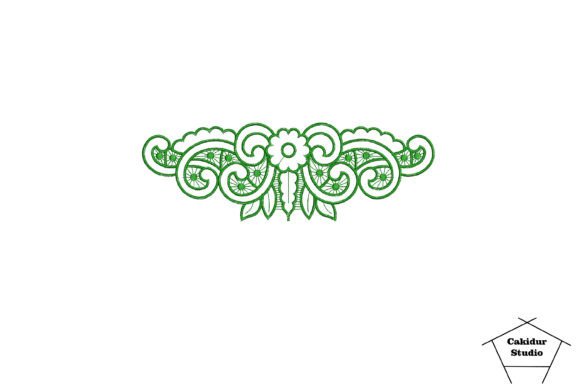
Green Floral Cloud
A Fresh, Classical Accent That Catches Eyes—Not Just Light
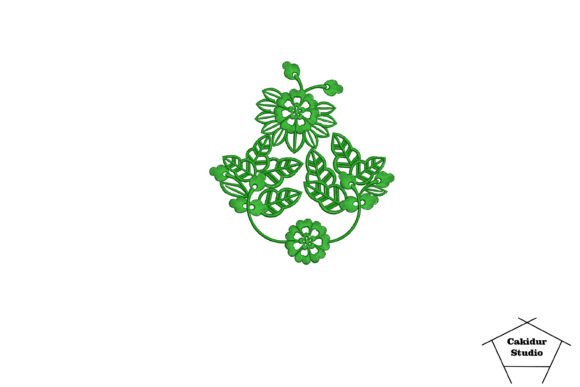
As someone who’s stitched over 300 craft fair booths and curated embroidery lines for handmade boutiques, my first impression of Green Floral Cloud is immediate: it’s neither loud nor shy—it’s confidently serene. The title alone evokes something airy yet grounded—think dewy ferns meeting soft cumulus, not botanical realism but a poetic suggestion. It lands squarely in the “fresh and classical” zone: modern enough for an Etsy seller’s minimalist linen pouch, timeless enough for a farmhouse apron at a local makers’ market. It’s not festive or rustic—it’s refined calm, which makes it unusually versatile across product categories.
Where Green Floral Cloud Shines on Craft Fair Products
This isn’t just another outline flower—it’s an outline flower with breath. Its abstract leaves and flowers leave intentional negative space, so it reads cleanly even at small scales. Here’s how it performs across real-world craft fair items:
- Tote bag design: Centered on a natural canvas tote? Yes—but place it slightly off-center (upper left quadrant) to avoid looking like a logo. The cloud-like flow balances the bag’s structure without overwhelming it.
- Apron embroidery: Perfect above the pocket on a denim or linen apron. The green tones harmonize with kitchen herbs and ceramic mugs—ideal for foodie markets and artisan bakeries.
- Tea towel embroidery: Works beautifully on medium-weight cotton towels. Avoid dense terry—we’ll get to that—but smooth, pre-shrunk flour-sack towels let the stitch definition sing.
- Embroidered patch: A standout. Its open shapes translate well to heat-press or sew-on patches. Customers love attaching these to denim jackets or market bags—Green Floral Cloud feels intentional, not generic.
- Caps and curved surfaces: Use caution. The abstract curves don’t distort as badly as tight florals, but test on a scrap cap first—the outermost leaves may need slight simplification if the crown curvature is aggressive.
- Pillow covers & fabric pouches: Ideal scale. At 3.5–4.5 inches wide, Green Floral Cloud anchors the surface without competing with texture or pattern.
What Makes It Sell—And What Makes It Stall
At a crowded craft fair, attention is measured in seconds. Green Floral Cloud wins because it’s instantly legible but quietly intriguing. Unlike busy filler motifs, it invites pause—not confusion. Buyers glance, then lean in. That’s gold for booth samples and Etsy listings.
Photography? It’s a dream. The contrast between leafy outlines and open space means clean shadows and crisp detail—even on phone screens. Pair it with soft linen, sage-green thread, and natural light, and your printable mockup will outperform 80% of trending floral designs.
For batch production? Highly repeatable. No tiny lettering, no nested petals requiring micro-stitch precision. As a machine embroidery design, its rhythm supports consistent hooping and thread changes. But—and this matters—check stitch density. Abstract shapes can tempt designers to over-fill. If the file includes dense fill areas near stems or cloud edges, those will puff on thick fabrics and blur on textured towels.
Careful-Use Notes Every Embroidery Designer Should Know
Don’t assume Green Floral Cloud behaves the same on every surface. Here’s where it needs thoughtful handling:
- Dense stitch areas: If the file includes shaded gradients or layered fills (not just outlines), they’ll sink into terry cloth or pile fabrics—test on your exact tea towel before stitching 50 units.
- Small details: Those delicate vine tips? They’ll vanish below 2.2 inches. For patches under 2”, simplify or use a scaled-down variant.
- Dark fabric: Green thread on charcoal or navy can mute contrast. Opt for lime, mint, or olive—not forest green—unless you’re using metallic or high-sheen thread.
- Curved caps & thick denim: Hoop tension and stabilizer choice are critical. Use cutaway + tear-away combo and reduce top tension slightly to prevent puckering on the cloud’s outer loops.
- Fabric texture: Avoid heavy slubs or bouclé—Green Floral Cloud relies on line clarity. Stick to smooth cotton, linen blends, or midweight twill.
Why This Design Strengthens Your Brand—Not Just Your Booth
Handmade quality isn’t just about stitches—it’s about intention. Green Floral Cloud signals care: it doesn’t shout, it resonates. When customers see it on your embroidered market bag or pillow cover, they register craftsmanship, cohesion, and quiet confidence—not craft-store filler.
For Etsy sellers and small shop owners, it builds brand consistency across product lines. Use the same thread palette (e.g., three greens + ecru) across aprons, patches, and pouches, and shoppers begin to recognize your visual language. On a crowded table display, Green Floral Cloud becomes your unspoken signature—soft but unmistakable.
Pro Designer Checklist Before You Stitch a Single Unit
This isn’t theoretical—I’ve learned the hard way. Before cutting fabric or loading your embroidery file:
- Test Green Floral Cloud on scrap fabric matching your final product’s weight and weave.
- Check thread contrast against all intended fabric colors—not just white or cream.
- Review spacing between elements: do leaves float freely, or do they crowd? Adjust if needed for your hoop size.
- Confirm stabilizer type: cutaway for stretchy knits, tear-away for stable wovens, fusible for lightweight linens.
- Create at least one real finished product—not just a digital mockup. See how light hits the stitches in person.
- Compare thread colors across lighting: natural daylight, booth LED, and phone flash all render greens differently.
- Verify commercial licensing. Since Green Floral Cloud is marketed as a machine embroidery design for handmade products, confirm whether resale of finished goods is permitted—and whether credit or attribution is required.
Bottom line: Green Floral Cloud isn’t just another outline flower. It’s a mood, a moment, and a smart business decision—if you treat it with the attention it deserves. For craft fair sellers, boutique makers, and digital embroidery file curators alike, it’s the kind of design that sells itself—once you’ve done the quiet work to let it breathe.