Green Floral Bush: A Designer’s Real-World Review
First Impressions: Quiet Elegance, Not Overstatement
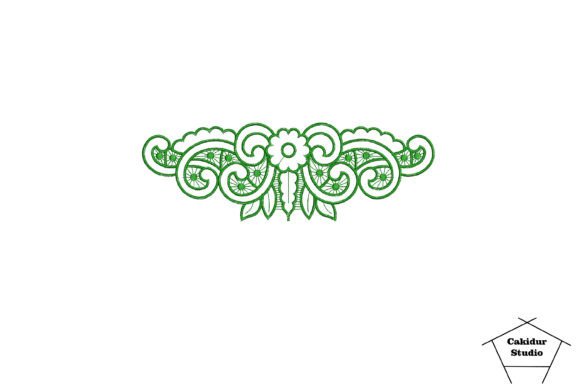
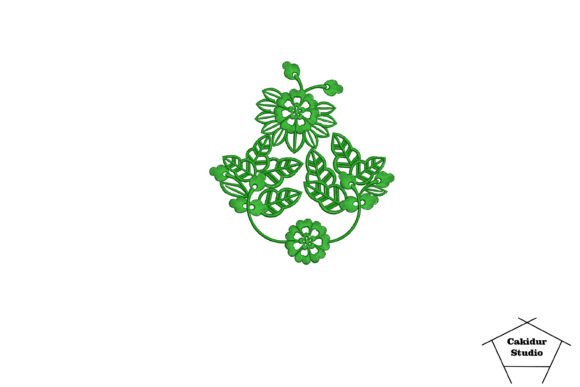
Opening the Green Floral Bush embroidery file, I didn’t see fussy petals or tight clusters — I saw breathing space. This isn’t a dense floral explosion; it’s an abstract bush, loosely structured, with organic curves and intentional negative space. The outline flowers feel grounded, almost botanical but not literal — more like a memory of greenery than a field guide illustration. It leans into subtlety, which is rare in today’s saturated embroidery market. That makes it instantly useful for designers who want sophistication without shouting.
Where It Shines: Real Projects, Real Customers
Last week, I stitched Green Floral Bush onto a natural linen tote bag for a local boutique launch. No monogram, no text — just one centered motif near the bottom seam. The result? Customers paused. They ran their fingers over the satin stitch stems and noticed how the fill stitch leaves held texture without bulk. It looked handmade, yes — but also intentional, considered. That’s the quiet power of this design: it elevates the finished product without overwhelming the item itself.
I’ve since used it on sweatshirt cuffs (scaled down 15%), baby onesies (with ultra-soft stabilizer), and as an embroidered patch for aprons in a small-batch kitchenware line. In each case, Green Floral Bush behaved like a reliable collaborator — not demanding attention, but earning respect through clarity and balance. Etsy sellers will appreciate how well it photographs: clean lines translate beautifully in printable mockups, and its neutral green palette works across light and dark fabric backgrounds without needing recoloring.
What to Watch For: Practical Limits, Not Flaws
This isn’t a one-size-fits-all embroidery file. Its charm lives in its openness — which means it can disappear on highly textured fabrics like bouclé or thick terry cloth unless you adjust stitch density or add a subtle underlay. On stretchy knits (think lightweight t-shirts), I recommend basting first and using cutaway stabilizer — not because the design misbehaves, but because its flowing lines need anchor points to stay true.
Small hoop sizes (under 4” diameter) require caution. The outer branches extend gracefully, and compressing them too much blurs the rhythm. If you’re stitching caps or curved surfaces, test placement on scrap first — the lower-left and upper-right corners carry delicate tapering stems that may distort if hooped off-center. Also, avoid pairing it with tiny lettering or dense decorative accents nearby; Green Floral Bush thrives when it’s the quiet focal point, not part of a busy cluster.
Stitching Clarity & Customer Perception
Here’s what matters to buyers — and why Green Floral Bush delivers: it stitches cleanly. No thread nests, no skipped satin stitches (assuming proper tension and stabilizer), and no confusing jump stitches hiding in the foliage. That translates directly to customer trust. When someone unwraps a personalized gift — say, a linen pillow cover with this design — they don’t see “machine embroidery.” They see care. They feel craftsmanship. That perception lifts perceived value, especially for small shop products where handmade presentation is non-negotiable.
For craft business owners, it supports brand consistency without locking you into a single aesthetic. Use it in sage on oatmeal linen for earthy branding, or in moss green on charcoal cotton for modern minimalism. It adapts — but never blends in.
Design Notes Every Embroiderer Should Try
- Test on scrap fabric first — especially if using it on baby embroidery or holiday embroidery where softness and durability matter.
- Check thread color contrast before final hooping. A medium olive thread on ecru linen reads differently than the same thread on navy denim.
- Review stitch density — not all versions of this design are equal. Some fills run lighter; others pack more coverage. Match density to your fabric weight.
- Confirm hoop size compatibility — if you work primarily with 3x3” hoops, verify whether the full motif fits comfortably or needs scaling.
- Inspect small details at 200% zoom: look for stray running stitch tails or overly tight corners that could snag during wear.
- Test black-and-white mockups — if you plan to list this as a digital embroidery file, ensure legibility without color cues.
- Use proper stabilizer — lightweight cutaway for stable wovens, tear-away for crisp cottons, and adhesive + cutaway for knits.
- Confirm licensing — since Green Floral Bush is marketed for commercial embroidery and craft business use, double-check terms before selling finished products or bundling it into design assets.
Final Thought: A Design That Serves the Project, Not the Other Way Around
So — should you use Green Floral Bush? Yes, if you value restraint, versatility, and real-world performance over trend-chasing. It won’t dominate your Instagram feed with flash, but it will earn repeat orders from customers who recognize quality stitching and thoughtful composition. It fits naturally into custom apparel, nursery decor, boutique branding, and even wedding gifts where elegance speaks softly. As an outline flowers design, it bridges tradition and modernity — rooted enough to feel timeless, open enough to breathe with your brand.
Just remember: great embroidery isn’t about the most complex file. It’s about the one that makes your next project feel inevitable — like Green Floral Bush did on that linen tote bag. Simple. Strong. Unhurried.