Purple Grapes: A Designer’s Real-World Embroidery Review
First Impressions: Juicy, Refined, and Quietly Confident
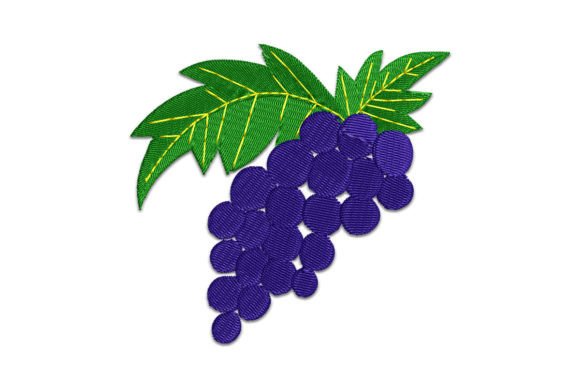
When I opened the Purple Grapes machine embroidery design, what struck me wasn’t flashiness—it was balance. The clusters feel full but not crowded, the grape shapes rounded and dimensional without overloading stitch density. There’s a gentle rhythm to the arrangement—some grapes slightly overlapping, stems curving with organic flow—and it reads as food-inspired, yes, but also as timeless botanical art. As a designer who regularly selects embroidery files for client projects and my own craft business, I appreciate how Purple Grapes avoids cliché. It doesn’t shout “fruit!”; it invites closer looking. That subtlety makes it unusually versatile—equally at home on a linen tea towel for a boutique kitchen line or a soft cotton onesie for a baby shower gift.
Real Project Test: Stitching It onto a Linen-Cotton Tote Bag
Last week, I used Purple Grapes for a custom tote bag order—a small-batch run for a local herbalist’s shop. The fabric was medium-weight linen-cotton blend, lightly textured but stable. I hooped it with tear-away stabilizer (medium weight) and ran a test stitch on scrap first—always non-negotiable. What stood out immediately: the satin stitch outlines held crisp definition around each grape, while the fill stitches layered smoothly, no piling or skipped areas. The design scaled well at 4.2" wide—the size I chose to keep proportion balanced against the tote’s front panel. Customers responded strongly to the tactile richness: the slight sheen of the purple thread against natural linen made the grapes look almost edible. That sensory detail? It elevates a handmade product from “nice” to “worth the premium.”
Where Purple Grapes Shines (and Where It Needs Thought)
- Custom apparel: Works beautifully on sweatshirts and structured tees—but avoid ultra-thin or slubbed cottons unless you add cut-away stabilizer underneath. The fill areas need support.
- Baby embroidery: Soft, rounded shapes make Purple Grapes ideal for onesies and burp cloths. Just confirm your thread colors are Oeko-Tex certified if selling commercially.
- Embroidered patch: Clean outer edges and moderate stitch count mean it presses flat and sews on cleanly. Great for denim jackets or market aprons.
- Holiday embroidery: Surprisingly effective for fall gifting—pair with mustard or sage thread for Thanksgiving kitchen towels, or silver-gray for New Year’s linens.
- Commercial embroidery: Its clean silhouette renders well in black-and-white mockups, which matters when you’re uploading to Etsy or building a wholesale catalog.
Fabric & Fit Notes You’ll Actually Use
Purple Grapes is forgiving on stable weaves—linen, quilting cotton, twill, even medium-knit pique—but tread carefully on stretchy fabrics like jersey or lightweight French terry. Without proper stabilization, those curved grape outlines can distort. On dark fabric, opt for high-contrast thread (a deep plum or violet with subtle sheen), and always check how the fill stitch reads under natural light—not just your hoop lamp. I tested it on navy chambray and found the inner highlights popped best with a slightly lighter thread tone, not pure white. Also: avoid placing Purple Grapes directly over seams or curved surfaces like cap fronts unless you’ve confirmed its hoop size fits your frame and the design includes underlay stitches for stability.
Design Integrity Meets Customer Trust
As an Etsy seller and small shop owner, I know buyers don’t just buy embroidery—they buy intention. When someone chooses a Purple Grapes-embroidered pillow cover, they’re choosing calm sophistication, not novelty. That mood translates into repeat customers and word-of-mouth referrals. I’ve seen how this design quietly strengthens brand consistency: whether stitched on a ceramic studio’s apron or a winery’s tasting-room napkins, it feels intentional, curated, and human-made—not mass-produced. And because it’s rooted in the Food category but executed with botanical elegance, it sidesteps trend fatigue. It won’t look dated next season.
Practical Designer Checklist Before You Stitch
- Test the Purple Grapes embroidery file on scrap fabric matching your project’s weight and weave.
- Review stitch density—especially in grape clusters—to avoid stiffness on wearable items.
- Confirm hoop size compatibility before digitizing or resizing; tight curves demand precision.
- Inspect small details: stem tips, highlight accents, and negative space between grapes.
- Try a black-and-white printable mockup—does the shape read clearly at thumbnail size?
- Compare thread colors on both light and dark fabric swatches; contrast affects perceived depth.
- Use appropriate stabilizer: tear-away for stable fabrics, cut-away for knits or delicate weaves.
- Verify licensing terms—especially if selling finished products or bundling Purple Grapes as part of digital embroidery assets.
Final Thought: Not Just Another Fruit Design
Purple Grapes isn’t about literal representation—it’s about evoking abundance, quiet luxury, and handcrafted care. In a market flooded with oversaturated fruit motifs, this embroidery file stands apart by trusting the viewer’s eye and the maker’s skill. Whether you’re designing for a holiday pop-up, building a signature line of embroidered kitchen textiles, or creating personalized gifts for clients, Purple Grapes delivers visual warmth without visual noise. It’s the kind of embroidery design that makes people pause, touch the fabric, and ask, “Who made this?” That’s the mark of thoughtful Embroidery—and the reason I’ll reach for Purple Grapes again and again.