Pink Flower Bouquet: A Designer’s Real-World Review
First Impressions: Soft, Feminine, and Surprisingly Versatile
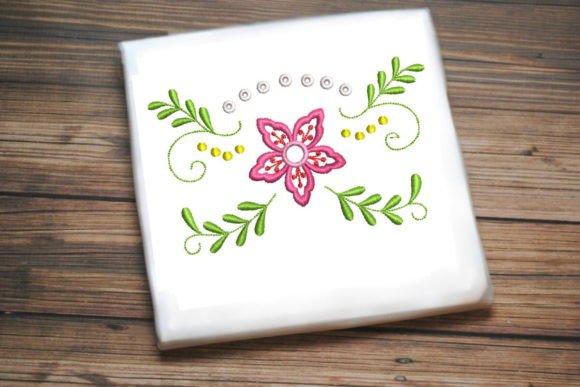
When I opened Pink Flower Bouquet for the first time, I wasn’t expecting much beyond a sweet, predictable floral motif. Instead, I found a design with quiet confidence—balanced asymmetry, gentle curves, and layered petal shapes that avoid looking stiff or overly digitized. It reads as “hand-drawn” in stitch form, not just a traced vector. The composition feels intentional: no overcrowding, no awkward gaps, and a natural flow that suggests movement—like a breeze just brushed past the stems. It’s unmistakably part of the Single Flowers category, but it doesn’t feel like a placeholder or generic filler. It feels like a signature piece you’d choose for a boutique apron or a keepsake baby onesie.
Real Project Test: Stitching It on a Linen Tea Towel
Last week, I used Pink Flower Bouquet to embroider a set of linen tea towels for a local kitchenware shop. Why linen? Because it’s unforgiving—loose weave, minimal stretch, and zero tolerance for poor stabilizer choices. I hooped medium-weight cutaway stabilizer, adjusted my tension slightly (linen pulls threads tighter than cotton), and stitched at 70% speed. The result? Crisp satin stitch petals, clean fill-stitch centers, and delicate running-stitch stems that didn’t snag or pucker. Customers loved how the soft pink tones translated beautifully—even without high-contrast thread, the design held its shape and readability. That tells me Pink Flower Bouquet isn’t just pretty on screen; it’s engineered for real embroidery project success.
Where It Shines (and Where It Needs Thought)
Pink Flower Bouquet excels on stable, medium-weight fabrics: cotton poplin for tote bags, midweight sweatshirt fleece for custom apparel, twill for embroidered patches, and even light denim for aprons or caps. Its moderate size and open layout make it ideal for personalized gift items—think monogrammed pillow covers or holiday embroidery on kitchen towels. As a machine embroidery design, it scales well: small enough for a baby onesie chest placement, large enough to anchor a tote bag front without overwhelming it.
But be thoughtful about context. On highly textured fabrics—like bouclé or heavy terry cloth—the finer stem details can disappear. On thin or stretchy knits (think lightweight tees or ribbed baby bodysuits), use tear-away + topping, and consider simplifying or omitting the smallest leaf accents if stitch density feels excessive. And while it looks elegant on dark fabric, test your thread colors carefully: pale pinks may mute on charcoal or navy unless you boost contrast with a subtle white underlay or switch to blush or rose tones.
What It Adds to Your Handmade Product
- Visual appeal: Instant warmth and approachability—ideal for brands leaning into calm, organic, or nostalgic aesthetics.
- Customer trust: Clean stitching = professional execution. Buyers notice when petals don’t bleed or stems don’t vanish into fabric texture.
- Giftability: Feels special without being fussy—perfect for bridal shower gifts, baby showers, or “just because” handmade presents.
- Brand consistency: Works across categories—tote bags, sweatshirt embroidery, nursery decor—without needing redesign or rebranding.
Practical Notes Every Designer & Seller Should Check
Before adding Pink Flower Bouquet to your next craft business batch or Etsy seller listing, run through these quick checks:
- Test on scrap fabric first—especially if using it on curved surfaces (caps) or layered garments (reversible aprons).
- Review stitch density. If your machine struggles with dense fills, confirm whether this digital embroidery file includes optional low-density versions—or plan to edit manually.
- Confirm hoop size. While it fits standard 4x4 hoops comfortably, double-check if you’ll need to resize for larger applications (e.g., center-back sweatshirt embroidery).
- Inspect small details—like the tip of the longest stem or inner petal edges. Do they hold up at 80% scale? Try stitching a thumbnail version on scrap first.
- Test black-and-white mockups. Does the design retain personality without color? This matters for printable mockups and digital product previews.
- Compare light vs. dark backgrounds. Some satin-stitch areas behave differently on black fabric—check for sheen shifts or thread visibility.
- Use proper stabilizer. Medium cutaway works for most uses, but for lightweight fabrics or high-wear items (tea towels, baby clothes), add a light tear-away topping.
- Verify licensing. Since Pink Flower Bouquet is marketed for personal and commercial use, confirm whether resale of finished products or redistribution of the embroidery file is permitted—this is essential for small shop product sellers and digital product creators.
Final Thought: Not Just Another Floral—It’s a Reliable Design Asset
I’ve passed over dozens of “pink flower” designs this year—too busy, too flat, too hard to stabilize, or too fragile-looking once stitched. Pink Flower Bouquet avoids all those pitfalls. It’s not flashy, but it’s dependable. It elevates a simple tote bag into something customers pause to admire. It softens a structured apron without sacrificing polish. It adds tenderness to baby embroidery without veering into cliché. For creative entrepreneurs, that kind of quiet reliability is gold—it means less revision, fewer customer questions about stitch quality, and more time spent growing your handmade product line instead of troubleshooting files.
If you’re curating design assets for a commercial embroidery workflow, building an Etsy shop around personalized gifts, or launching a small-batch boutique collection, Pink Flower Bouquet earns its place—not as filler, but as a foundational piece. It’s the kind of embroidery design that makes clients say, “I didn’t know I needed this—until I saw it stitched.” And in our line of work, that’s the highest compliment.