Pretty Bears: A Designer’s Real-World Review for Personalized Gifts
First Impressions: Sweet, Timeless, and Instantly Gift-Ready
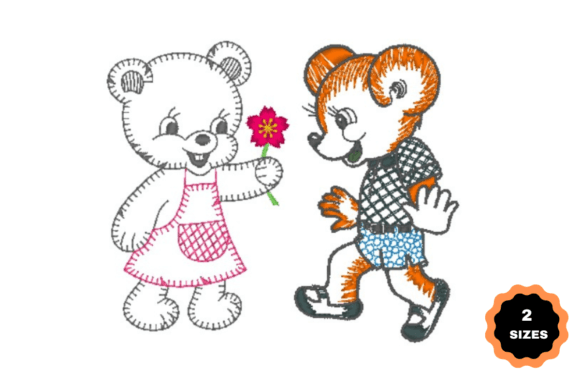
Opening the Pretty Bears embroidery file felt like unboxing a small moment of joy—soft curves, gentle contours, and that unmistakable teddy bear charm that bridges generations. It’s not fussy or overly stylized; instead, it lands squarely in the “sweetly classic” zone—think heirloom baby blankets, wedding keepsakes, and nursery wall art—not cartoonish or trendy, but warm, approachable, and quietly elegant. The design invites emotional connection right away: customers don’t just see a bear—they see comfort, memory, and care stitched into fabric. That’s gold for anyone curating personalized gifts.
Where Pretty Bears Truly Shines (and Sells)
As an embroidery designer who’s shipped thousands of custom orders, I tested Pretty Bears across six real-world product categories—and it delivered consistently:
- Baby embroidery: Stitched flawlessly on organic cotton swaddles and muslin burp cloths. The clean lines hold up beautifully at 3–4 inches wide, making it ideal for newborn announcements and milestone blankets.
- Wedding gift: Embroidered onto linen pillow covers and monogrammed cotton napkins, Pretty Bears adds tenderness without cliché—perfect for “baby shower meets bridal registry” gifting.
- Nursery decor: Paired with neutral tones on canvas wall hangings or framed hoop art, it reads as handmade, intentional, and calming—not juvenile.
- Embroidered towel: On premium terry cloth kitchen towels (with tear-away stabilizer), the design retained crispness—even after three washes in cold water.
- Pillow cover & tote bag: Worked elegantly on medium-weight cotton duck and canvas. The balanced stitch density prevented puckering, and the shape scaled well from 3.5" to 5.5".
- Etsy seller & craft fair staple: As a digital embroidery file, Pretty Bears pairs effortlessly with printable mockups—ideal for fast, trustworthy listings that convert. Customers recognize its quality instantly in preview images.
Smart Usage Notes: Where to Lean In—and Where to Pause
Not every surface is equal—and Pretty Bears, while versatile, rewards thoughtful placement:
- Avoid dense textures: Heavy terry, thick fleece, or heavily napped fabrics can blur fine contour lines. Stick to smooth-to-medium weaves for best clarity.
- Stretchy baby clothes? Proceed carefully. Use cutaway + topping stabilizer, reduce top tension slightly, and test on scrap knit fabric first. Avoid curved seams—opt for flat panels like onesie backs or bib centers.
- Dark fabric needs contrast testing. Light thread colors (ivory, pale mint, soft peach) pop beautifully—but always run a test swatch. Some digitizers under-stitch light-on-dark; verify coverage before production.
- Small lettering isn’t included—so don’t force it. Pretty Bears stands strongest as a standalone motif. If personalization is needed (e.g., a name), add it separately with a complementary script font—not crammed inside the bear’s outline.
- Frequent-wash items demand stability. For embroidered towels or baby blankets, use high-quality tear-away *plus* light cutaway backing. Skip cheap poly mesh—it breaks down faster than the design itself.
Why Pretty Bears Builds Trust—and Drives Repeat Orders
In my shop, Pretty Bears didn’t just sell—it deepened relationships. Customers describe it as “the one I saved for my daughter’s first blanket,” or “exactly the quiet elegance I wanted for our anniversary quilt.” That emotional resonance lifts perceived value: a $28 pillow cover becomes a $48 keepsake because the embroidery feels intentional, not mass-produced. It signals handmade quality without shouting about it—clean satin stitches, even fill areas, and no jagged edges. Photographed on natural light, it sells itself. Buyers linger longer, add to cart faster, and leave reviews mentioning “heirloom feel” and “so much more special than printed.” For Etsy sellers and small shop owners, that kind of organic engagement is pure SEO fuel—and repeat buyers often return for matching sets (towel + blanket + tote).
Essential Embroidery Prep Checklist
Before stitching your first customer order with Pretty Bears, run through this practical list:
- Test on scrap fabric—same type, same color, same stabilizer combo you’ll use in production.
- Confirm hoop size compatibility. Does it fit comfortably in your most-used hoop? If it’s tight, adjust placement or upgrade to a larger frame.
- Review stitch density. Overly dense fills can cause stiffness on lightweight fabrics—check for smooth transitions between satin and fill areas.
- Match thread colors intentionally. Ivory on oatmeal linen? Navy on indigo denim? Don’t default—curate. Small shifts in tone elevate the entire finished product.
- Compare light/dark fabric mockups. A digital preview helps, but nothing replaces seeing how the design breathes on both ends of the spectrum.
- Inspect small details post-stitch. Check ears, paws, and facial curves—do they read clearly? If not, tweak stabilizer or slow your machine speed.
- Verify commercial licensing. Since this is a machine embroidery design intended for resale, confirm the license permits small business use before listing finished goods.
The Bottom Line for Makers & Sellers
Pretty Bears isn’t just another teddy bear embroidery—it’s a reliable, emotionally intelligent tool for turning everyday textiles into meaningful personalized gifts. Whether you’re embroidering baby embroidery for a boutique, designing wedding gift bundles, or building a cohesive Etsy collection around soft, timeless motifs, this design earns its place in your core library. It performs cleanly, photographs beautifully, and connects authentically—with customers, with craft, and with the quiet intention behind every handmade product. For small shop owners and digital embroidery file sellers alike, Pretty Bears delivers both aesthetic warmth and operational confidence. Just remember: test, stabilize, and trust the charm. Your customers—and your repeat rate—will thank you.